Pickleball Stacking Strategy — How and When to Stack
Stacking is a doubles positioning strategy that allows both partners to choose their preferred court side regardless of which side the scoring rules would normally place them on. By lining up together on one side before the serve and shifting positions after the ball is struck, stacking teams can ensure each player receives balls on their dominant side throughout the game. It is used at every level from intermediate club play to professional tournaments.
Why Teams Stack
Standard doubles positioning puts players on alternating sides based on the score — the server’s position tracks with even/odd score numbers. This means partners sometimes have to serve from or receive on their backhand side, which is their weaker position. Stacking solves this: both players line up together on one side before the serve, then shift to their preferred sides after the ball is in play. The most common stacking scenario: a right-handed player and left-handed player pair to ensure both have their forehand in the middle of the court.
How the Stack Works on the Serve
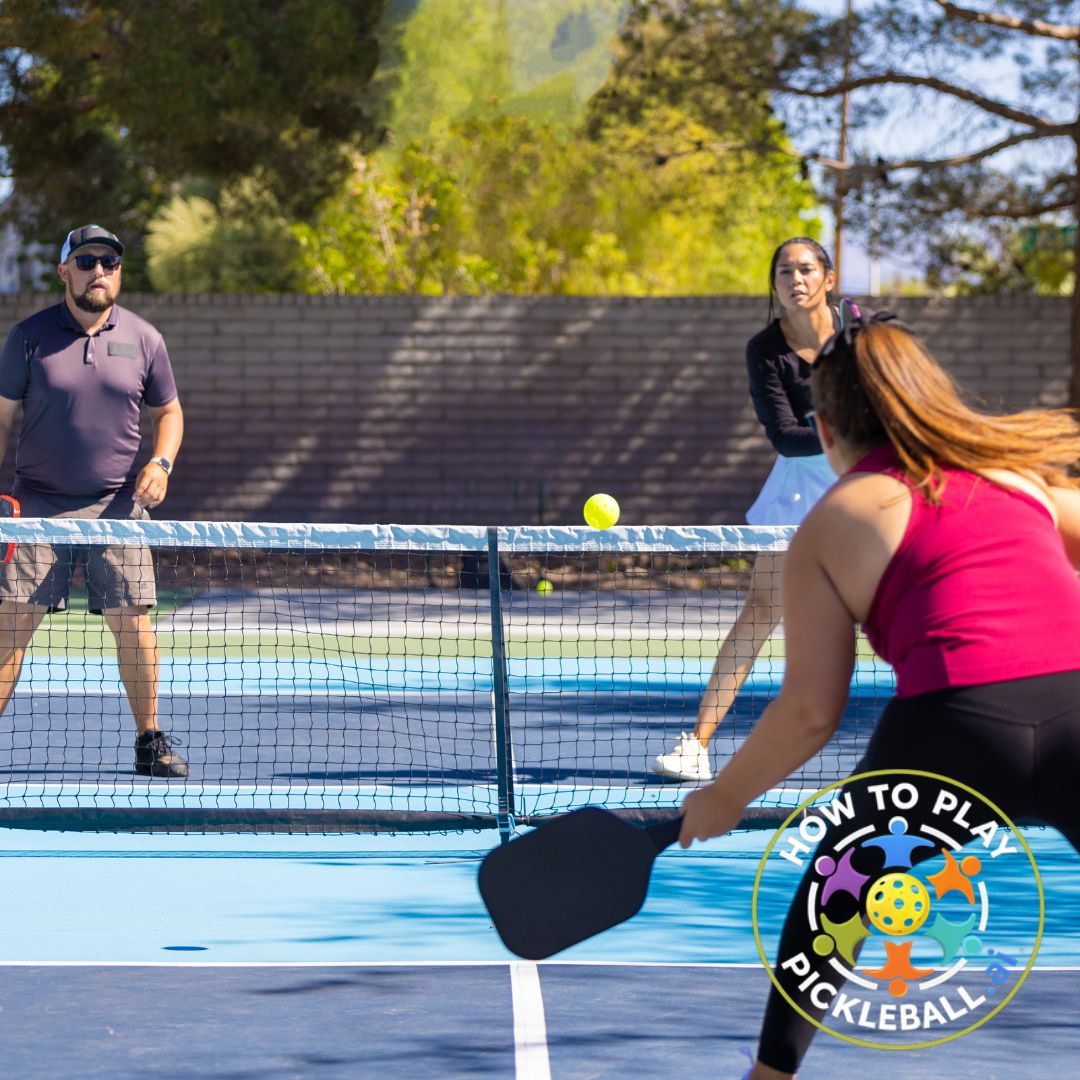
On the serve: the serving player serves from the correct position (based on the score), but the partner stands beside them rather than on the opposite side. After the serve lands, both players shift to their preferred positions — typically one moves left and one moves right to cover their respective sides. The serving player must begin the serve from the correct score-based position, but the partner has no rule-mandated position and can stand anywhere on the court.
How the Stack Works on the Return
On the return of serve: the receiving player (who must stand in the correct receiving position) hits the return, while the partner stands in the non-receiving area — often just inside or behind the baseline on the opposite side. After the return is struck, both players shift to preferred positions. The returning player moves to their preferred side; the partner holds their starting position or shifts as needed.

When Stacking Is Worth It
Stacking adds complexity to your game — miscommunications between partners who are new to stacking are common and lead to gaps the opponents exploit. Stacking is worth the complexity when both partners have strong forehand games and one has a significantly weaker backhand, when one partner is left-handed and the standard rotation frequently puts forehands on the outside instead of the middle, or when you have practiced stacking enough that the communication is automatic. For casual recreational play, stacking is often unnecessary unless one partner has a major backhand weakness.
Frequently Asked Questions
Is stacking legal in pickleball?
Yes, stacking is completely legal. The only rule governing position at the moment of the serve is that the server must serve from the correct score-based position and the receiver must be in the correct receiving box. Partners have no mandatory position restrictions.
How do I start stacking with my partner?
Agree on your preferred sides before the game starts. Practice the shift movement in a low-pressure context — recreational games or drilling — before using it in competitive play. Start with stacking only on the serve (the simpler application) before adding stacking on the return. Clear communication about who goes where on each serve is essential.
Do professional pickleball players stack?
Yes, stacking is very common at the professional level, particularly among mixed doubles pairs where a left-handed and right-handed player pair to maximize forehand coverage. Many professional doubles teams use some form of stacking regularly.